1/27/14

Democratic Vistas


In 1871 Walt Whitman wrote an essay titled "Democratic Vistas". He seems to be aware that keeping women –in his time white women– from the vote was a great crime. He seems less conscious of the flaws woven into our country by chattel slavery. Those are flaws we've only started to mend and often against what seems like the will of the masses. Human rights should never be put to a vote. In spite of this all-to-common blindness I think Whitman's vision of democracy can offer us some hope. He recognizes that democracy as is popularly understood by the white Americas of his time is polluted with a belief that some humans should still be ruled, just in a democratic manner. Not so, says Whitman. The true aim of democracy is perfect individualism of all humans expressed by joining the masses, not ruling them, “
Would you have in yourself the divine, vast, general law? Then merge yourself in it.” Here are a few highlights:


"We have frequently printed the word Democracy. Yet I cannot too often repeat that it is a word the real gist of which still sleeps, quite unawaken'd, notwithstanding the resonance and the many angry tempests out of which its syllables have come, from pen or tongue. It is a great word, whose history, I suppose, remains unwritten, because that history has yet to be enacted."

“The United States are destined either to surmount the gorgeous history of feudalism, or else prove the most tremendous failure of time.[...] The political history of the past may be summ'd up as having grown out of what underlies the words, order, safety, caste, and especially out of the need of some prompt deciding authority, and of cohesion at all cost. Leaping time, we come to the period within the memory of people now living, when, as from some lair where they had slumber'd long, accumulating wrath, sprang up and are yet active...”

"Did you, too, O friend, suppose democracy was only for elections, for politics, and for a party name? I say democracy is only of use there that it may pass on and come to its flower and fruits in manners, in the highest forms of interaction between men, and their beliefs -- in religion, literature, colleges, and schools -- democracy in all public and private life, and in the army and navy."

"I think, after all, the sublimest part of political history, and its culmination, is currently issuing from the American people. I know nothing grander, better exercise, better digestion, more positive proof of the past, the triumphant result of faith in human kind, than a well-contested American national election."

"I have everywhere found, primarily, thieves and scalliwags arranging the nominations to offices, and sometimes filling the offices themselves. I have found the north just as full of bad stuff as the south. Of the holders of public office in the Nation or the States or their municipalities, I have found that not one in a hundred has been chosen by any spontaneous selection of the outsiders, the people, but all have been nominated and put through by little or large caucuses of the politicians, and have got in by corrupt rings and electioneering, not capacity or desert. I have noticed how the millions of sturdy farmers and mechanics are thus the helpless supple-jacks of comparatively few politicians. And I have noticed more and more, the alarming spectacle of parties usurping the government, and openly and shamelessly wielding it for party purposes."


"Sad, serious, deep truths. Yet are there other, still deeper, amply confronting, dominating truths. Over those politicians and great and little rings, and over all their insolence and wiles, and over the powerfulest parties, looms a power, too sluggish may-be, but ever holding decisions and decrees in hand, ready, with stern process, to execute them as soon as plainly needed -- and at times, indeed, summarily crushing to atoms the mightiest parties, even in the hour of their pride."


And a few lines that I find are a quintessential example of "same story different era" (NOTE: I do not think all business people are corrupt):


"The depravity of the business classes of our country is not less than has been supposed, but infinitely greater. The official services of America, national, state, and municipal, in all their branches and departments, except the judiciary, are saturated in corruption, bribery, falsehood, mal-administration; and the judiciary is tainted. The great cities reek with respectable as much as non-respectable robbery and scoundrelism. In fashionable life, flippancy, tepid amours, weak infidelism, small aims, or no aims at all, only to kill time. In business, (this all-devouring modern word, business,) the one sole object is, by any means, pecuniary gain. The magician's serpent in the fable ate up all the other serpents; and money-making is our magician's serpent, remaining to-day sole master of the field."


You can read the whole thing here.

Deliver us... from the service of mammon

 (image: Pieter Brueghel the Elder "Avarice")

".... Deliver us, we beseech thee, in our several callings, from the service of mammon, that we may do the work which thou givest us to do, in truth, in beauty, and in righteousness, with singleness of heart as thy servants, and to the benefit of our fellow men... "

via 1928 book of common prayer

12/14/13

Whoever you are, no matter how lonely; the world offers itself to your imagination...


“You do not have to be good.
You do not have to walk on your knees
for a hundred miles through the desert, repenting.
You only have to let the soft animal of your body
love what it loves.
Tell me about despair, yours, and I will tell you mine.
Meanwhile the world goes on.
Meanwhile the sun and the clear pebbles of the rain
are moving across the landscapes,
over the prairies and the deep trees,
the mountains and the rivers.
Meanwhile the wild geese, high in the clean blue air,
are heading home again.
Whoever you are, no matter how lonely,
the world offers itself to your imagination,
calls to you like the wild geese, harsh and exciting –
over and over announcing your place
in the family of things.”
― Mary Oliver

12/2/13

Writing advice that helps answer the question....

... that great question of "what should I do with my life."


“You don't take on subject matter because of an objective sense that one sort of subject matter is more important than something else. You take on what you can handle, what you can transform, what you can make your own, what you can make explicable and clear to somebody else, the reader who might stumble across the poem and recognize his or her life in that cloudy mirror.” -- William Matthews

11/11/13

"We Must Risk Delight"

A Brief for the Defense

by Jack Gilbert

Sorrow everywhere. Slaughter everywhere. If babies
are not starving someplace, they are starving
somewhere else. With flies in their nostrils.
But we enjoy our lives because that's what God wants.
Otherwise the mornings before summer dawn would not
be made so fine. The Bengal tiger would not
be fashioned so miraculously well. The poor women
at the fountain are laughing together between
the suffering they have known and the awfulness
in their future, smiling and laughing while somebody
in the village is very sick. There is laughter
every day in the terrible streets of Calcutta,
and the women laugh in the cages of Bombay.
If we deny our happiness, resist our satisfaction,
we lessen the importance of their deprivation.
We must risk delight. We can do without pleasure,
but not delight. Not enjoyment. We must have
the stubbornness to accept our gladness in the ruthless
furnace of this world. To make injustice the only
measure of our attention is to praise the Devil.
If the locomotive of the Lord runs us down,
we should give thanks that the end had magnitude.
We must admit there will be music despite everything.
We stand at the prow again of a small ship
anchored late at night in the tiny port
looking over to the sleeping island: the waterfront
is three shuttered cafés and one naked light burning.
To hear the faint sound of oars in the silence as a rowboat
comes slowly out and then goes back is truly worth
all the years of sorrow that are to come.

8/7/12

I have ventured to paint my happiness on the wall

I know a women who craves her own suffering. She loves to be needed so she actively believes that everyone is downtrodden and desires her concern. She loves no one, but loves everyone's pain - real or imagined.


THE CRAVING FOR SUFFERING -- When I think of the craving to do something, which continually tickles and spurs those millions of young Europeans who cannot endure their boredom and themselves, then I realize that they must have a craving to suffer and to find in their suffering a probable reason for action, for deeds. Neediness is needed! Hence the politicians' clamor, hence many false, fictitious  exaggerated "conditions of distress" of all sorts of classes and the blind readiness to believe in them. These young people demand that  -- not happiness but unhappiness should approach from the outside and become visible; and their imagination is busy in advance to turn it into a monster so that afterward they can fight a monster. If these people who crave distress felt the strength inside themselves to benefit themselves and to do something for themselves internally, then they would also know how to create for themselves, internally, their very own authentic distress. Then their inventions might be more refined and their satisfactions might sound like good music, while at present they fill the world with their clamor about distress and all too often introduce into it the feeling of distress. They do not know what to do with themselves - and therefore paint the distress of others on the wall; they always need others! And continually other others! - Pardon me, my friend, I have ventured to paint my happiness on the wall.  

-- Nietzsche


7/2/12

My father's advice I have never heeded.


Since I was a little boy my father has subtly, and not so subtly, given me a solitary piece of advice: "Where there are many words transgression is unavoidable". This poem by Rilke is my father's advice that I never have heeded. 


“A tree ascended there. Oh pure transcendence!
Oh Orpheus sings! Oh tall tree in the ear!
And all things hushed. Yet even in that silence
a new beginning, beckoning, change appeared.

Creatures of stillness crowded from the bright
unbound forest, out of their lairs and nests;
and it was not from any dullness, not
from fear, that they were so quiet in themselves,

but from just listening. Bellow, roar, shriek
seemed small inside their hearts. And where there had been
at most a makeshift hut to receive the music,

a shelter nailed up out of their darkest longing,
with an entryway that shuddered in the wind --
you built a temple deep inside their hearing.”

            -Rilke, Part I, The Sonnets of Orpheus

4/26/12

A Psalm of Life


A Psalm of Life
by Henry Wadsworth Longfellow
                     'Life that shall send A challenge to its end, And when it comes, say, 'Welcome, friend.''
WHAT THE HEART OF THE YOUNG MAN SAID TO THE PSALMIST
             I
Tell me not, in mournful numbers,

Life is but an empty dream!
For the soul is dead that slumbers,
And things are not what they seem.

II
Life is real—life is earnest—
And the grave is not its goal:
Dust thou art, to dust returnest,
Was not spoken of the soul.

III
Not enjoyment, and not sorrow,
Is our destin'd end or way;
But to act, that each to-morrow
Find us farther than to-day.

IV
Art is long, and time is fleeting,
And our hearts, though stout and brave,
Still, like muffled drums, are beating
Funeral marches to the grave.

V
In the world's broad field of battle,
In the bivouac of Life,
Be not like dumb, driven cattle!
Be a hero in the strife!

VI

Trust no Future, howe'er pleasant!
Let the dead Past bury its dead!
Act—act in the glorious Present!
Heart within, and ['Verse**] o'er head!

VII

Lives of great men all remind us
We can make our lives sublime,
And, departing, leave behind us
Footprints on the sands of time.

VIII

Footprints, that, perhaps another,
Sailing o'er life's solemn main,
A forlorn and shipwreck'd brother,
Seeing, shall take heart again.

IX

Let us then be up and doing,
With a heart for any fate;
Still achieving, still pursuing,
Learn to labor and to wait.

** Original version read "God o'er head'. Changes are my own. 

3/11/12

The Time Before Death

The Time Before Death
by Kabir (version by Robert Bly)

Friend, hope for the Guest while you are alive.
Jump into experience while you are alive!
Think . . . and think . . . while you are alive.
What you call “salvation” belongs to the time
before death.

If you don’t break your ropes while you’re alive,
do you think
ghosts will do it after?

The idea that the should will rejoin the ecstatic
just because the body is rotten—
that is all fantasy.
What is found now is found then.
If you find nothing now,
you will simply end up with an apartment in the
City of the Death.

If you make love with the divine now, in the next
life you will have the face of satisfied desire

So plunge into the truth, find out who the Teacher is,
Believe in the Great Sound!

Kabir says this: When the Guest is being searched for
it is the intensity of the longing for the Guest that
does all the work.
Look at me, and you will see a slave of that intensity.

11/16/11

I want to be with people who submerge

To be of use
by Marge Piercy

The people I love the best
jump into work head first
without dallying in the shallows
and swim off with sure strokes almost out of sight.
They seem to become natives of that element,
the black sleek heads of seals
bouncing like half submerged balls.

I love people who harness themselves, an ox to a heavy cart,
who pull like water buffalo, with massive patience,
who strain in the mud and the muck to move things forward,
who do what has to be done, again and again.

I want to be with people who submerge
in the task, who go into the fields to harvest
and work in a row and pass the bags along,
who stand in the line and haul in their places,
who are not parlor generals and field deserters
but move in a common rhythm
when the food must come in or the fire be put out.

The work of the world is common as mud.
Botched, it smears the hands, crumbles to dust.
But the thing worth doing well done
has a shape that satisfies, clean and evident.
Greek amphoras for wine or oil,
Hopi vases that held corn, are put in museums
but you know they were made to be used.
The pitcher cries for water to carry
and a person for work that is real.

10/20/11

Give thanks and lie down in peace, Having seen your salvation.

Atlantis
by W. H. Auden

Being set on the idea
Of getting to Atlantis,
You have discovered of course
Only the Ship of Fools is
Making the voyage this year,
As gales of abnormal force
Are predicted, and that you
Must therefore be ready to
Behave absurdly enough
To pass for one of The Boys,
At least appearing to love
Hard liquor, horseplay and noise.

Should storms, as may well happen,
Drive you to anchor a week
In some old harbour-city
Of Ionia, then speak
With her witty sholars, men
Who have proved there cannot be
Such a place as Atlantis:
Learn their logic, but notice
How its subtlety betrays
Their enormous simple grief;
Thus they shall teach you the ways
To doubt that you may believe.

If, later, you run aground
Among the headlands of Thrace,
Where with torches all night long
A naked barbaric race
Leaps frenziedly to the sound
Of conch and dissonant gong:
On that stony savage shore
Strip off your clothes and dance, for
Unless you are capable
Of forgetting completely
About Atlantis, you will
Never finish your journey.

Again, should you come to gay
Carthage or Corinth, take part
In their endless gaiety;
And if in some bar a tart,
As she strokes your hair, should say
"This is Atlantis, dearie,"
Listen with attentiveness
To her life-story: unless
You become acquainted now
With each refuge that tries to
Counterfeit Atlantis, how
Will you recognise the true?

Assuming you beach at last
Near Atlantis, and begin
That terrible trek inland
Through squalid woods and frozen
Thundras where all are soon lost;
If, forsaken then, you stand,
Dismissal everywhere,
Stone and now, silence and air,
O remember the great dead
And honour the fate you are,
Travelling and tormented,
Dialectic and bizarre.

Stagger onward rejoicing;
And even then if, perhaps
Having actually got
To the last col, you collapse
With all Atlantis shining
Below you yet you cannot
Descend, you should still be proud
Even to have been allowed
Just to peep at Atlantis
In a poetic vision:
Give thanks and lie down in peace,
Having seen your salvation.

All the little household gods
Have started crying, but say
Good-bye now, and put to sea.
Farewell, my dear, farewell: may
Hermes, master of the roads,
And the four dwarf Kabiri,
Protect and serve you always;
And may the Ancient of Days
Provide for all you must do
His invisible guidance,
Lifting up, dear, upon you
The light of His countenance.

7/14/11

Parable of the Madman

The Parable of the Madman

- Friedrich Wilhelm Nietzsche (October 15, 1844 – August 25, 1900)

Have you not heard of that madman who lit a lantern in the bright morning hours, ran to the market place, and cried incessantly: "I seek God! I seek God!"---As many of those who did not believe in God were standing around just then, he provoked much laughter. Has he got lost? asked one. Did he lose his way like a child? asked another. Or is he hiding? Is he afraid of us? Has he gone on a voyage? emigrated?---Thus they yelled and laughed

The madman jumped into their midst and pierced them with his eyes. "Whither is God?" he cried; "I will tell you. We have killed him---you and I. All of us are his murderers. But how did we do this? How could we drink up the sea? Who gave us the sponge to wipe away the entire horizon? What were we doing when we unchained this earth from its sun? Whither is it moving now? Whither are we moving? Away from all suns? Are we not plunging continually? Backward, sideward, forward, in all directions? Is there still any up or down? Are we not straying, as through an infinite nothing? Do we not feel the breath of empty space? Has it not become colder? Is not night continually closing in on us? Do we not need to light lanterns in the morning? Do we hear nothing as yet of the noise of the gravediggers who are burying God? Do we smell nothing as yet of the divine decomposition? Gods, too, decompose. God is dead. God remains dead. And we have killed him.

"How shall we comfort ourselves, the murderers of all murderers? What was holiest and mightiest of all that the world has yet owned has bled to death under our knives: who will wipe this blood off us? What water is there for us to clean ourselves? What festivals of atonement, what sacred games shall we have to invent? Is not the greatness of this deed too great for us? Must we ourselves not become gods simply to appear worthy of it? There has never been a greater deed; and whoever is born after us---for the sake of this deed he will belong to a higher history than all history hitherto."

Here the madman fell silent and looked again at his listeners; and they, too, were silent and stared at him in astonishment. At last he threw his lantern on the ground, and it broke into pieces and went out. "I have come too early," he said then; "my time is not yet. This tremendous event is still on its way, still wandering; it has not yet reached the ears of men. Lightning and thunder require time; the light of the stars requires time; deeds, though done, still require time to be seen and heard. This deed is still more distant from them than most distant stars---and yet they have done it themselves.

It has been related further that on the same day the madman forced his way into several churches and there struck up his requiem aeternam deo. Led out and called to account, he is said always to have replied nothing but: "What after all are these churches now if they are not the tombs and sepulchers of God?"

6/17/11

that's why they're called nobodies. Failures are unforgettable.


Failure - Philip Schultz

To pay for my father's funeral
I borrowed money from people
he already owed money to.
One called him a nobody.
No, I said, he was a failure.
You can't remember
a nobody's name, that's why
they're called nobodies.
Failures are unforgettable.
The rabbi who read a stock eulogy
about a man who didn't belong to
or believe in anything
was both a failure and a nobody.
He failed to imagine the son
and wife of the dead man
being shamed by each word.
To understand that not
believing in or belonging to
anything demanded a kind
of faith and buoyancy.
An uncle, counting on his fingers
my father's business failures—
a parking lot that raised geese,
a motel that raffled honeymoons,
a bowling alley with roving mariachis—
failed to love and honor his brother,
who showed him how to whistle
under covers, steal apples
with his right or left hand. Indeed,
my father was comical.
His watches pinched, he tripped
on his pant cuffs and snored
loudly in movies, where
his weariness overcame him
finally. He didn't believe in:
savings insurance newspapers
vegetables good or evil human
frailty history or God.
Our family avoided us,
fearing boils. I left town
but failed to get away.

further reading

5/7/11

meeting with the dark side of the moon


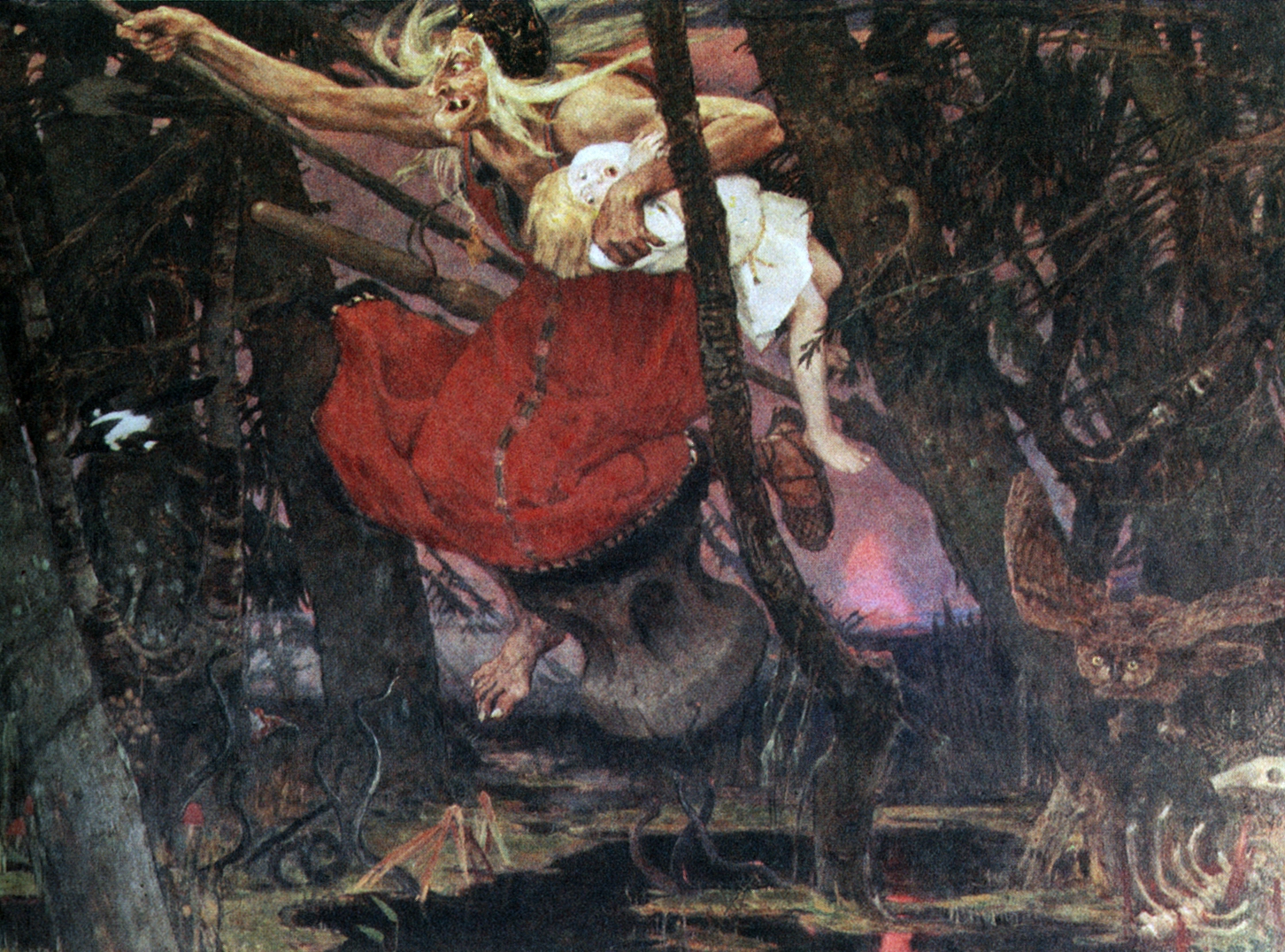
"So we do not descend to the bottom of the hill merely by seeing the dark side of ourself, or our friends, difficult as that is, Baba Yaga, in Russian tales, asks: Are you here to pursue a good deed or to shirk it? We reach the bottom when Baba Yaga's hostile boar energy has completely replaced - for a time - childlike eros which each of us felt when our mother set a breast to our mouth, or later set a cup of milk down for us at the table, or when our first marvelous girlfriend beckoned us to bed. These loves are all well; but descent is complete when both have been replaced by the boar-tusked, hog bristled, big-mouthed, skull-necklaced, insanely high-spirited energy of Baba Yaga.

Something wants us there, wants the meeting with the Dark Queen, wants the boar to open his mouth, wants Grendel's pool to fill with blood, wants the swords to melt, wants the Giantess to put the boy in her sack.

Young men in our culture often imagine, when they look forward to meeting Baba Yaga, that they can "kill" her. They imagine annihilation, total victory; but the stories make clear that such fantasies belong to the uninitiated men. The only solution to power of the witch is for the young man to develop energy as great as hers, as harsh, as wild, as shrewd, as clear in its desire. When a young man arrives at her house, proves himself to be up too her level of intensity, purpose, and respect for the truth, she will sometimes say, "Okay, what do you want to know?" -- Robert Bly from "Iron John"